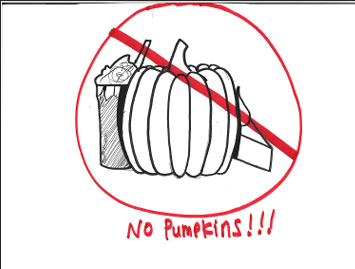
As the leaves start to turn golden and a chill develops in the air, a scary phenomenon returns, one more frightening than any horror movie ever seen: the domination of pumpkin spice.
For me, it is not just a seasonal favorite but a monster that haunts every corner of life. It is inescapable, plaguing everything it touches: pumpkin spice lattes, donuts, candles, cereals and even soap.You can’t walk down the street without seeing pumpkin spice on every restaurant menu or even go to the store without orange packaging littering the shelves. Far more threatening than anything seen on a screen, this is reality.
Now don’t get me wrong. The appeal of pumpkin spice is understandable, just like we can all relate to the villain at some point of time in the movie. Fall is the season for harvesting pumpkins, making them easily available for use. For some, the spicy-sweet scent can even produce a warm and fuzzy feeling of nostalgia. Does anything else signal fall more than the overwhelming smell of pumpkin spice? But these facts don’t excuse the chaos it creates every year.
Part of the craze isn’t even about taste at all; it comes from FOMO, otherwise known as the fear of missing out. As the Cleveland Clinic Health Essentials describes it, FOMO “refers to the feeling or perception that other people are having fun, experiencing new things or living a better life than you.”
Pumpkin spice is publicized everywhere on social media, in ads and in the hands of everyone at Starbucks. When everyone is constantly raving about how much they love pumpkin spice items, it leaves no choice but to produce a desire to participate. But let’s be honest: it’s more of a trend and about the hype the product gets than it is the taste and genuine love for it. It attracts us, and it is shown by the millions of people who flock to restaurants each year just to taste it.
MarketWatch analyzes the sales Starbucks gets every fall for its seasonal pumpkin spice latte and estimates it to be around $500 million every year. Starbucks relies on this moneymaker every year on the simple fact that people can’t stand to feel left out, so many people participate to feel more connected to others through shared experiences.
The takeover of pumpkin spice needs to be stopped and better yet, replaced with a much better option: apple cider. Apple cider is simply better; it is the hero in this equation waiting for the moment of belief. It provides a more natural flavor that genuinely tastes like apples, whereas pumpkin has more of an overbearing artificial flavor, often making it too sweet.
According to NPR, most of the pumpkin flavor is actually a simplified recipe that
includes chemicals to represent the taste of pumpkins. “Those flavored compounds are mainly manufactured using synthetic chemistry, rather than extracted from plants that grow in a field or plantation.” Wouldn’t you rather eat a food or drink that is derived from actual fruit and not another derived from the additives we consume daily?
Apples are also versatile and associated with some of America’s favorites. Apples are the staple from which our nation was created, specifically apple pie. There is a reason the phrase goes “as American as apple pie” and not “as American as pumpkin.”And who doesn’t love good caramel apples at a fair? Now that screams fall.
The growth of apples is just as big as pumpkins during the fall, so they’ll be readily available for consumption in fan-favorite products. Just because pumpkins are grown during the fall doesn’t mean this should give them the ability to take over the spotlight. Watermelons are grown in the summer, but we don’t let them define the whole season.
We should know that in every story, the hero always wins. And when the credits roll this fall season, I’ll know which one I’ll be cheering for.