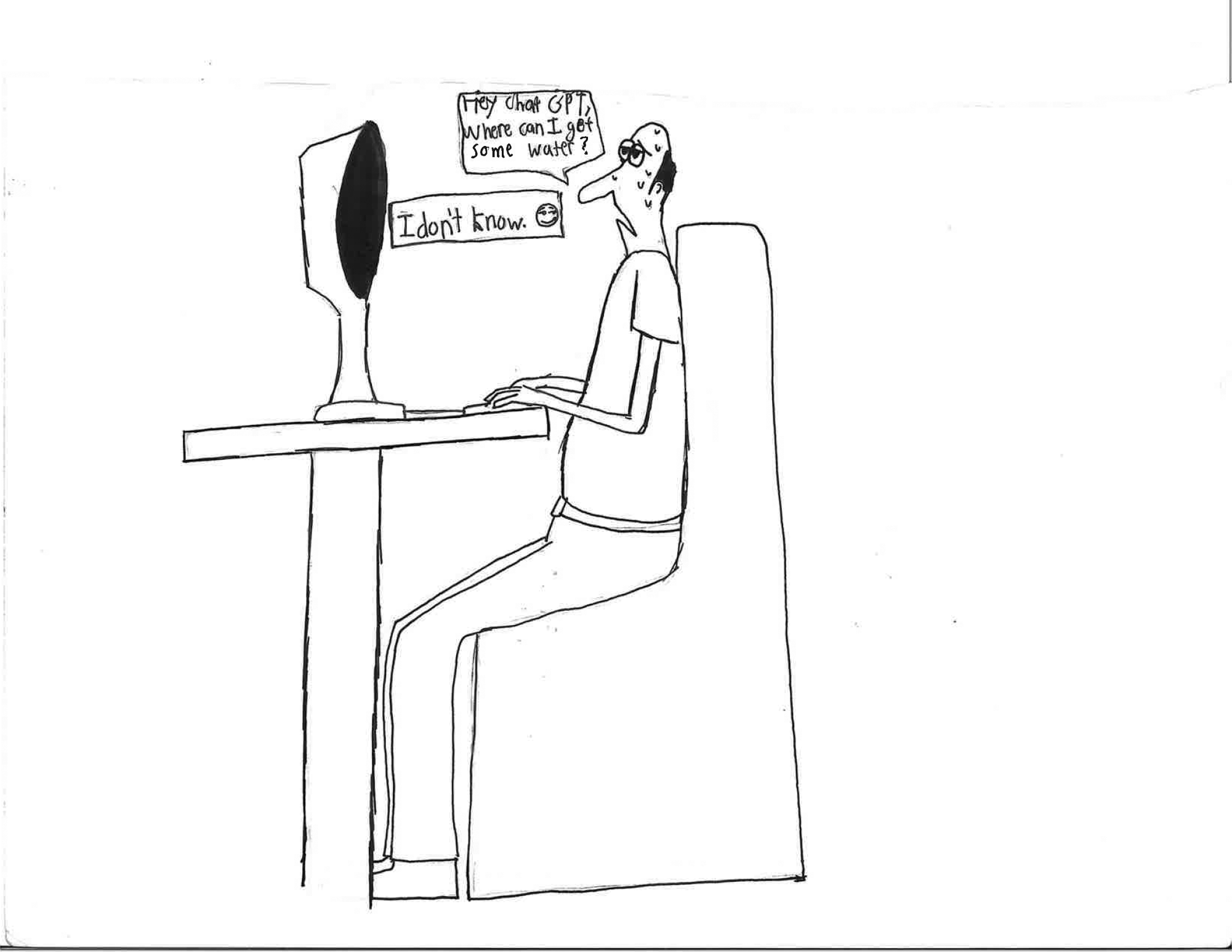
“Write a 300-word opinion article about how AI is draining our clean water supply. Make sure the grammar is correct and that it sounds like a senior in high school wrote it. Also mention how AI harms creativity and is ruining future careers in animation, design, and music. Use the new Viking Room wall as an example. Make sure you include how AI can be helpful, but in moderation.” Wait, this isn’t ChatGPT… I guess I’ll have to write this myself.
I get it, AI is useful when it comes to assignments you don’t want to do or when you need to get something done quickly, but you should always consider the repercussions. Shaolei Ren, a professor of engineering and computer engineering, said, “Training a large language model like GPT-3 can consume millions of liters of fresh water, and running GPT-3 inference for 10-50 queries consumes 500 milliliters of water, depending on when and where the model is hosted. GPT-4, the model currently used by ChatGPT, reportedly has a much larger size and hence likely consumes more water than GPT-3.”
That teeny tiny question you asked the other day that may make you think, “It’s just one question, it won’t hurt!” actually will. There are still millions of people in the world who lack fresh water. At this rate, in 10 years, water scarcity will worsen if we continue to employ AI for unnecessary reasons. Not only are we using up massive amounts of water, but we’re also losing our natural human instinct: creativity!
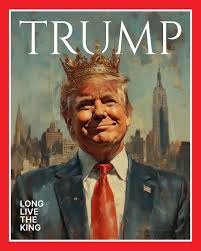
Did you know that AI-generated images are other people’s art? It takes from other artists (database) and just combines them. In 2023, Content Marketer Kyla Ball stated that, “AI digital art or AI digital images are generated by a machine learning algorithm or process. This means that a machine has collected the data it needs (or ‘learned’ it) and used it to produce a new AI-generated image. All AI-generated artwork begins with the collection of vast amounts of data. This data can include photos, paintings, illustrations – in fact, any type of visual content. The collected data is fed into an AI model, often based on deep learning architectures.”
I agree, AI-generated images are a more productive way to ‘make’ something, but it takes away the biggest parts of any art form: soul and originality. A robot can write a song about love, but it will never have the experience of it.
AI has me questioning everything, including the images I see every day. There’s a new wall right by the Viking Room. I walked by it and noticed a few things about it that led to my suspicion of it being AI. Rather than pointing fingers and being accusatory, I interviewed Carla Erdey to understand her process of creating the wall. “I did use AI to help come up with the wording on it. I do use ChatGPT often as a creative partner rather than having it do everything for me. I don’t know the designer’s process; it is possible that AI was used somewhere along the line, but my preference is to have students generate everything. We want to do work over at the North Building to collaborate with the art department and the social studies classes, and do a local history wall that features photography done by students,” she stated.
I think that the wall definitely should’ve been a student-led project instead of wasting resources to generate the idea, but I understand there are inconveniences and processes involved with letting students take over something like a mural. It’s important to know how to tell AI-generated images from real art, but also to never attack somebody for using it. The wall is a great way to show our school spirit! It represents H-F Vikings amazingly, and I can’t wait to see what’s in store for the North Building.
My opinion on AI isn’t meant to criticize anyone, but rather to make them more aware. Your creativity makes you more human than anything else. In some cases, AI is very useful and necessary, but when it comes to creative thinking, just do it yourself. What’s more important, our water supply for the next 20 years, or an essay that you didn’t study for?