Leaving cookies out for Santa and kissing under the mistletoe are fairly popular Christmas traditions in the United States. These types of customs are what keep the Christmas spirit alive and showcase how we as a society express joy and identity.
When I was younger, I had always assumed these traditions persisted in other cultures around the world. However, by exploring how other cultures celebrate Christmas, we can learn to understand and appreciate the diversity of our world and how we use it to bring meaning and connection to holidays.
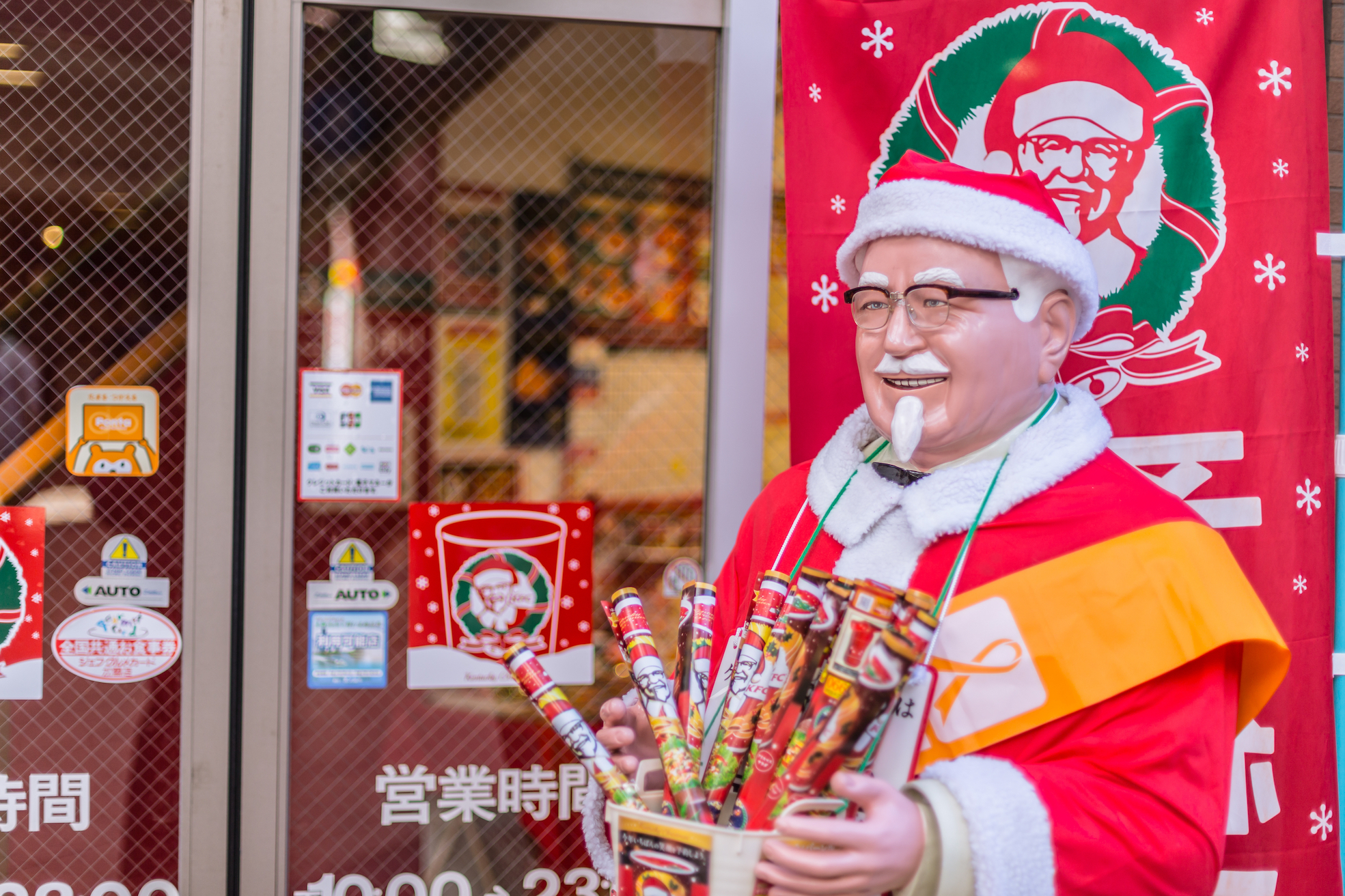
In Japan, eating Kentucky Fried Chicken (KFC) on Christmas Day has become quite the holiday tradition, with families sometimes ordering months in advance in order to have fried chicken as their chosen meal for the day.
It originally started in the 1970s, when KFC came to Japan, the brand released their first Christmas campaign “Kentucky for Christmas” as an alternative for those who couldn’t get turkeys during the holiday.
According to KFC, since its original launch, “Kentucky for Christmas” has evolved into ”Colonel statues dressed in Santa attire outside restaurants across the country and Christmas-exclusive menu items…..”To this day, KFC has continued to be a vital part of Christmas in Japan.
In Gävle, Sweden, a humongous straw goat is erected in central Gävle every year at the start of Advent that is 43 feet tall and takes two days to put up. According to Visit Gävle, the tradition originally started in 1966, where the idea came from children’s tales where, in some stories, Christmas elves would “ride the Yule goat door to door to deliver gifts to sleeping children.”
According to Visit Gävle, “The inauguration attracts tens of thousands of Gävle residents and visitors, and the immensely popular straw goat can be followed via a webcam and on social media from the time he is assembled until he is taken down.”
In Oaxaca, Mexico, they celebrate the holiday with Noche de Rábanos. It occurs annually on Dec. 23, where the creatives of Oaxaca gather around to share intricate displays of carved oversized radishes to compete for prizes.
According to Oaxaca Travel Tips, Noche de Rábanos, or The Night of Radishes, originally started in the 19th century, when one year, the radish crop was so abundant that some radishes weren’t discovered. When they were dug up months later, they had grown very large and shapely.
The giant radishes were eventually brought to the Christmas Eve market and carved to draw attention to the vegetable stands. In 1897, the mayor proposed a contest that started a tradition that continues to showcase the city’s talent each and every year.
Although not every place celebrates Christmas the same, by looking past physical borders, we can better appreciate the variety of traditions and cultures that shape the meaning of Christmas itself: a holiday that brings people together and families and friends closer.