

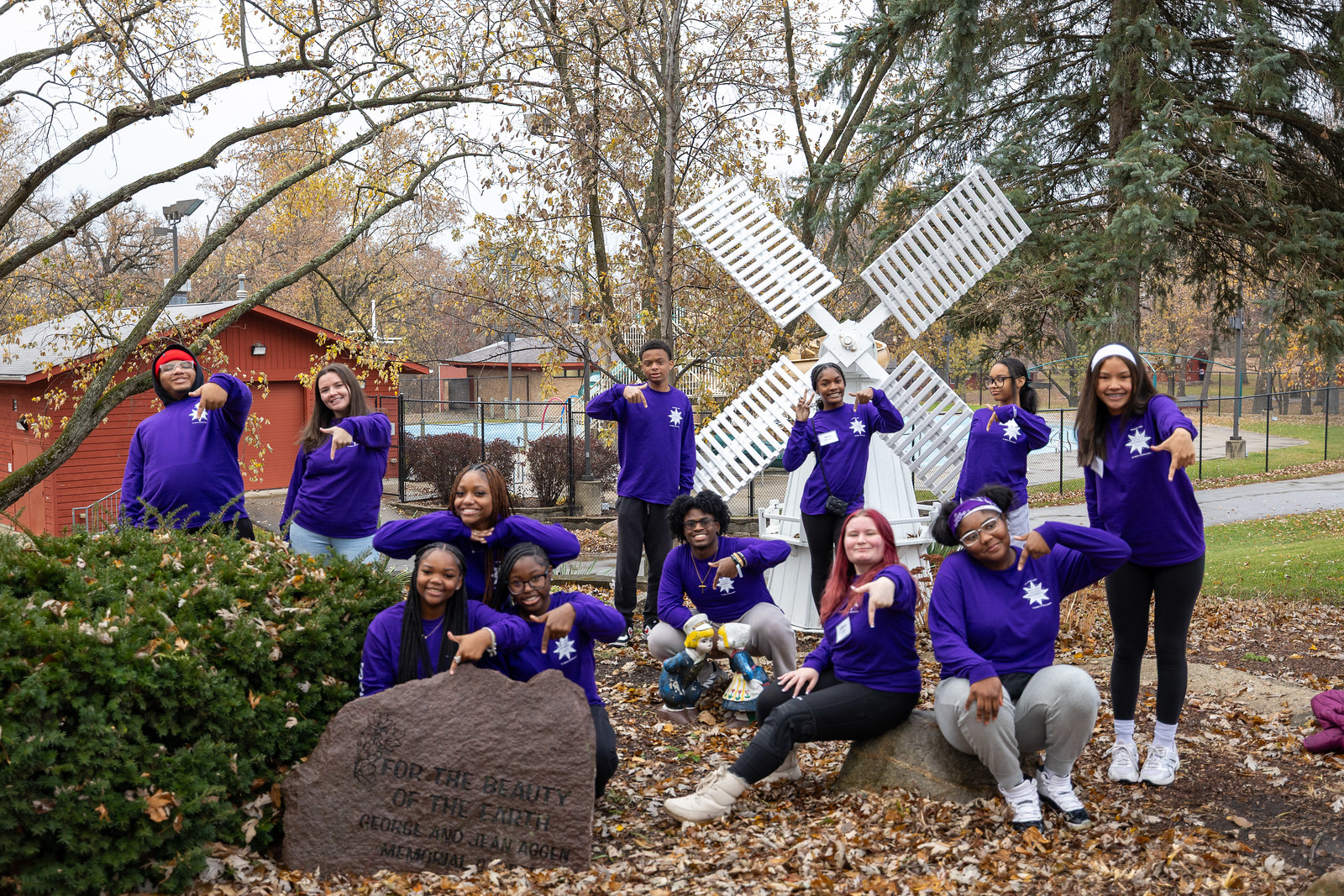

“I feel good, uh! Oh, I feel so good, uh-huh!”
This was the first of many chants that I heard as I walked into Camp Manitoqua for Operation: Snowball, in response to someone asking, “Snowball, how you feel?”
I never thought that I’d be saying the chant, as it seemed like yet another example of the preconceived notion I had of Snowball’s cultish nature. The participants, directors or staff members wouldn’t be clear about what occurs at Snowball, you can’t have your phone and there’s all the hoopla around the chanting. However, I found that what I really needed was a new perspective.
Days, even weeks, before I walked into Camp Manitoqua, a place that has been a significant part of my childhood, I vowed to be open-minded at Snowball.
I found myself needing to emphasize this vow to myself quite a bit on the first night, as giving up my phone, and therefore my music, was definitely an adjustment. Personally, it wasn’t that bad, but some were gravely affected by the absence of their phones.
My math teacher and Snowball’s adult overall director, Paul Fasse, emphasized that participants’ phones being taken away is fundamental to the Snowball experience. “I think there’s just something innate within humans that we want real experiences in the real world with real people,” he claimed.
He went on to say that once participants overcome their electronic withdrawals, they can engage more healthfully with electronics.
Rather than allowing these trivial absences to affect my experiences, I made an effort to view everything through a lens of curiosity rather than judgment, per Fasse’s advice.
Regarding this lens, Fasse stated, “It’s not necessary, but I think it does help. It’s a matter of [asking], how much do you want to get out of the weekend?”
Upon arrival, I attended my first large group meeting, at which I was assigned to my small group. Large group meetings convene all participants and staff for about an hour, typically to hear a speaker.
Large group speakers included H-F employees and alumni, such as H-F maintenance worker Rikk Dunlap and class of 2016 alum and founder and CEO of You Matter 2 Destiny Watson, as well as others from H-F and the south-suburban communities. These were strong speakers with powerful stories, touching on deep topics such as drug abuse and death.
These speakers’ messages really sat with me. Given the true confidentiality maintained at Snowball, I will not discuss what the speakers covered or what was said. They were thought-provoking and referenced throughout the weekend in small groups and mini-workshops.
Small groups, comprised of eight to 10 participants, broke off to discuss the speaker and play games, while mini-workshops covered topics ranging from mental health to college advice. Students were able to choose their own mini-workshops after receiving a brief description of each available one for the day.
On top of that, during the second afternoon, small groups bonded at union stations, which featured classic camp games and team-building activities.
For me, it quickly became apparent that small groups, mini-workshops and your cabin can make or break your experience at Snowball. Your experience is shaped by the mini-workshops you choose, while your small groups are predetermined, and your experiences in them depend heavily on how much your group members converse.
Looking back, I realized that what immersed me in the Snowball spirit were the extensive back-to-back mini-workshops and small group meetings on the first afternoon. These consecutive deep conversations undoubtedly helped me better understand Snowball and were a turning point in my experience.
These valuable conversations would not have been possible without complete trust and confidentiality. I found that no phones and establishing values that honor these requirements guaranteed authenticity in group discussions.
All this comes together, not to form a cult, but a community.
So, no, Snowball is not a cult. From the outside, I can understand why it can be perceived as one, but once you participate with curiosity rather than judgment, everything changes.
I did this by having candid side conversations with people I knew before the event about my curiosity, ignorance and confusion regarding Snowball. Snowball teen publicity director Ariana Salas provided valuable insight into the purpose of the aforementioned “how you feel?” chant: it’s about positivity, not just yelling.
“When you say [the chant, you’re saying] ‘this program means a lot to me.’ So, it does make me feel good at the end of the day, and I’m happy about all the work that I’m doing, because I’m doing it for other people. So, I get to show that off with that cheer and yell it out,” Salas explained.
I intentionally changed my perspective, moving away from the cultish, attention-seeking notions and prejudice of Snowball. Others viewed Snowball as “trauma-dumping,” but I saw small group and mini-workshop discussions as empathetic conversations that helped me gain a deeper understanding of my peers.
What I learned is that, to have a truly immersive and enjoyable experience, as my cabin leader, H-F class of 2022 alum Carter Langston, said, “you have to lean in.” You have to lean into the activities, the large and small group meetings, the mini-workshops, the union stations and, of course, the positivity. And yes, this means even leaning into the chants.
Operation: Snowball is not a cult; it’s what you make of it. If you welcome it with an open mind and a curious perspective, you’ll love it and understand why others do too.



fiorella michelis • Jan 12, 2026 at 5:27 pm
thanks for your article, bryce! i was the program co-director alongside our beloved fasse in 2019, and haven’t had the pleasure of returning to support staff since 2020. i laughed at your title and am oddly pleased to know that students still debate the cult-like perception vs the actual reality. i remain proud of my time in snowball, despite moving over a thousand miles away from hoflo. thank you for having an open mind and i’m so glad you enjoyed your experience! you should apply to be on staff 🙂
Lorrie Maul • Jan 12, 2026 at 4:12 pm
Thank you Bryce! You summed it up better than I ever could! I am so pleased that you enjoyed your experience and hope you will continue to be part of our community for years to come!!!