

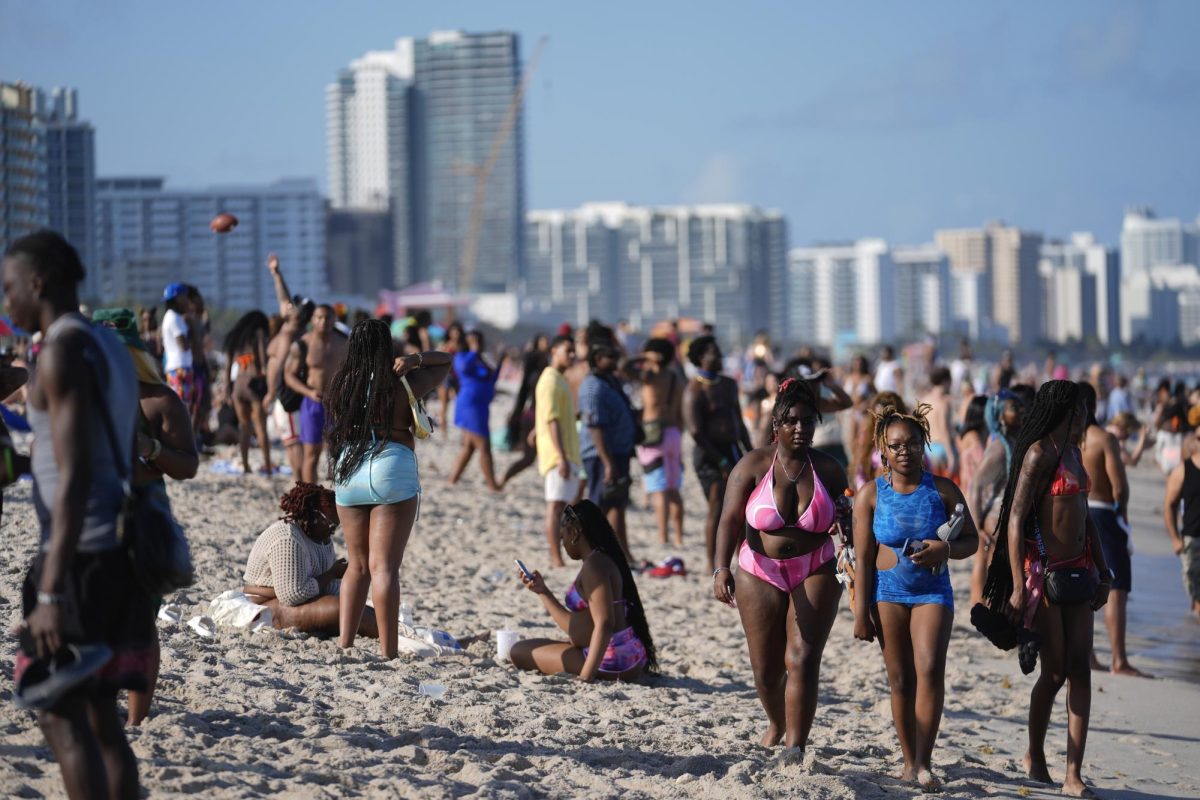
Spring Break is generally known as a mid-semester break for students to travel, socialize and relax before the chaos and stress of the final exam season. While many students plan to travel internationally every year, as Spring Break approaches, there are some travel restrictions or changes that all travellers have to consider.
ICE Presence At Airports:
According to the National Immigration Law Center, as of late 2025 and coming into 2026, the Transportation Security Administration (TSA) will be giving passenger information to Immigration and Customs Enforcement (ICE) to cross-examine with their own records in order to make deportation arrests.
Paired with this, ICE agents are using a smartphone app called “Mobile Fortify” that lets agents scan a face and capture ‘contactless’ fingerprints that they then run through biometric matching systems to return names and biographical data.
Since President Donald Trump took office, airport ICE arrests have spiked 94 percent over the same period last year in 2024, revealed by newly released government data analyzed by an independent, non-profit newsroom dedicated to reporting with and for immigrant communities called Documented.
Data obtained from the Deportation Data Project showed that arrests of people with no criminal convictions or charges at airports have increased by 560 percent during the second Trump administration over the same period. Of the immigrants detained, most were clear of charges or only committed minor offenses, such as traffic violations.
In light of this, the American Civil Liberties Union urged international travellers to “know your rights” and know how to protect themselves in the face of unreasonable search, seizure or detainment.
TSA and Global Entry:
As of March 11, The Department of Homeland Security has reopened Global Entry after its 17 day suspension due to the partial government shutdown.
According to the U.S. Customs and Border Protection, The Global Entry program “allows expedited clearance for pre-approved, low-risk travelers upon arrival in the United States.” The membership lasts for five years and all applicants undergo a background check.
AP News said “the turmoil at security and customs lanes is tied to a partial government shutdown that began Feb. 14 after Democrats and the White House were unable to reach a deal on legislation to fund the Department of Homeland Security.”
Previously, the hiatus of Global Entry drastically slowed the process of going through security at the airport, especially for frequent international travellers, as travellers had to go through regular security and be subjected to extra security processes.
Moreover, those who are going through TSA will continue to face unusually long wait times with lines stretching into terminals and even parking areas according to USA Today. They continue to go on claiming that “roughly 50,000 TSA officers are continuing to work but without regular pay during the funding lapse, raising concerns about staffing shortages and absenteeism as spring break travel ramps up.” Travellers are encouraged to arrive at least three hours early to the airport.
Invalid Passports:
In the past several months, American travellers have discovered a costly surprise: their U.S. passports were being marked invalid, sometimes after they had already left the country.
Parker Anderson, a writer for travel magazine Travel and Leisure, recently shared a TikTok video detailing an experience where he was detained coming into Thailand due to his passport being marked invalid after being reported as missing or stolen. Even though his passport was still safely in his possession, Anderson was detained and deported back to the United States shortly following the ordeal.
Passports can be invalidated for several reasons. The U.S Department of State stated they may revoke or restrict a passport due to physical damage, an approaching or passed expiration date or lack of sufficient blank pages for visas. In some cases like Anderson, passports may even be flagged due to clerical error or unresolved issues.
As the U.S. Department of State issued a Level 4 “Do Not Travel” advisory for Iran due the ongoing armed conflict, travel outside the United States is uncertain. Hopefully by taking these conditions into consideration, Spring Break 2026 will continue to be forecasted as a sunny, fun and stress-free escape this season.
This article was last updated on Mar. 12, 2026, however with the many changes happening under the Trump administration everyday, it is best to check your local news stations and travel websites for any updates daily.