Since Apr. 8 President Donald Trump has been placing tariff after tariff on the United States.
According to BBC, a tariff is a tax that is on imported goods that typically charge a percentage of a good’s value. The tax is paid to the government by other companies bringing in foreign products. An example is if there is a 20% tariff on a product that is $30 that means that there is a $6 tax on that product making the cost $36.
These tariffs are making basic needs for the average American more expensive. The price of just living an everyday life has skyrocketed.
According to NPR, Trump has put tariffs on basic groceries like seafood that we normally get from Chile, India, Indonesia and Vietnam all combined having a 114% tax. Another is beef that we normally get from New Zealand and Australia each having a 10% tax, lastly another taxed good is the rice that we normally get from India and Thailand.The U.S. will receive a tax at 62%.
According to UC Davis consumers have to pay more for living in all. Choices at the grocery store have been reduced due to the countries that import to the United States have slowed down or stopped importing their goods.
These tariffs are making it harder for Americans to receive packages and other goods from foreign countries. This could put strains on the economy, like encouraging inflation and increasing consumer costs.
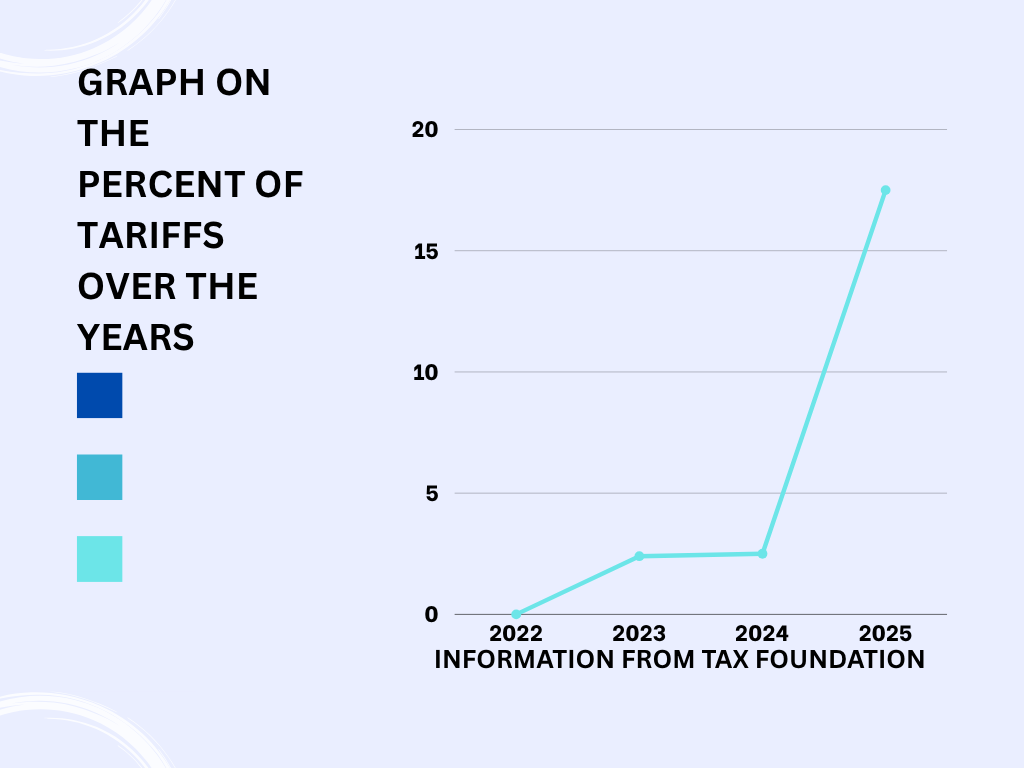
According to CBS, these tariffs have driven inflation up 2.85% since August alone. The prices of food have been 0% in January 2022 and have now moved up to 17.8% since August of this year.
The impacts of tariffs are reaching beyond consumers. Rural areas are starting to lose value in their crops due to these tariffs.
According to CNN, soybean farmer John Bartman has shared his opinion on the tariffs and is upset that the value of his homegrown soybeans has dropped sharply because of them. These tariffs have affected the economy, especially farmers. Last year, soybean prices totaled $24 billion, and 52% of those soybeans were bought from China. Since May, the U.S. hasn’t placed a single order for soybeans. Due to the tariffs, China has bought its soybeans in bulk from Venezuela instead. The price of soybeans has increased significantly, especially for fertilizer. Most farmers believe they will not regain their larger customers, such as China, for a while.
According to DW News, China has also said that the tariffs Trump imposed are not sustainable and that it will stop most of its trade with the U.S., making imports more difficult. These tariffs have also affected other countries, so most of the imports and exports will not come from foreign countries we trade with for their products.
These tariffs could make it harder for consumers could strain to purchase goods from stores because the prices could become too high. These tariffs also could strain trading relationships with other countries.